


Why Healthcare Does Not Need Another Extreme
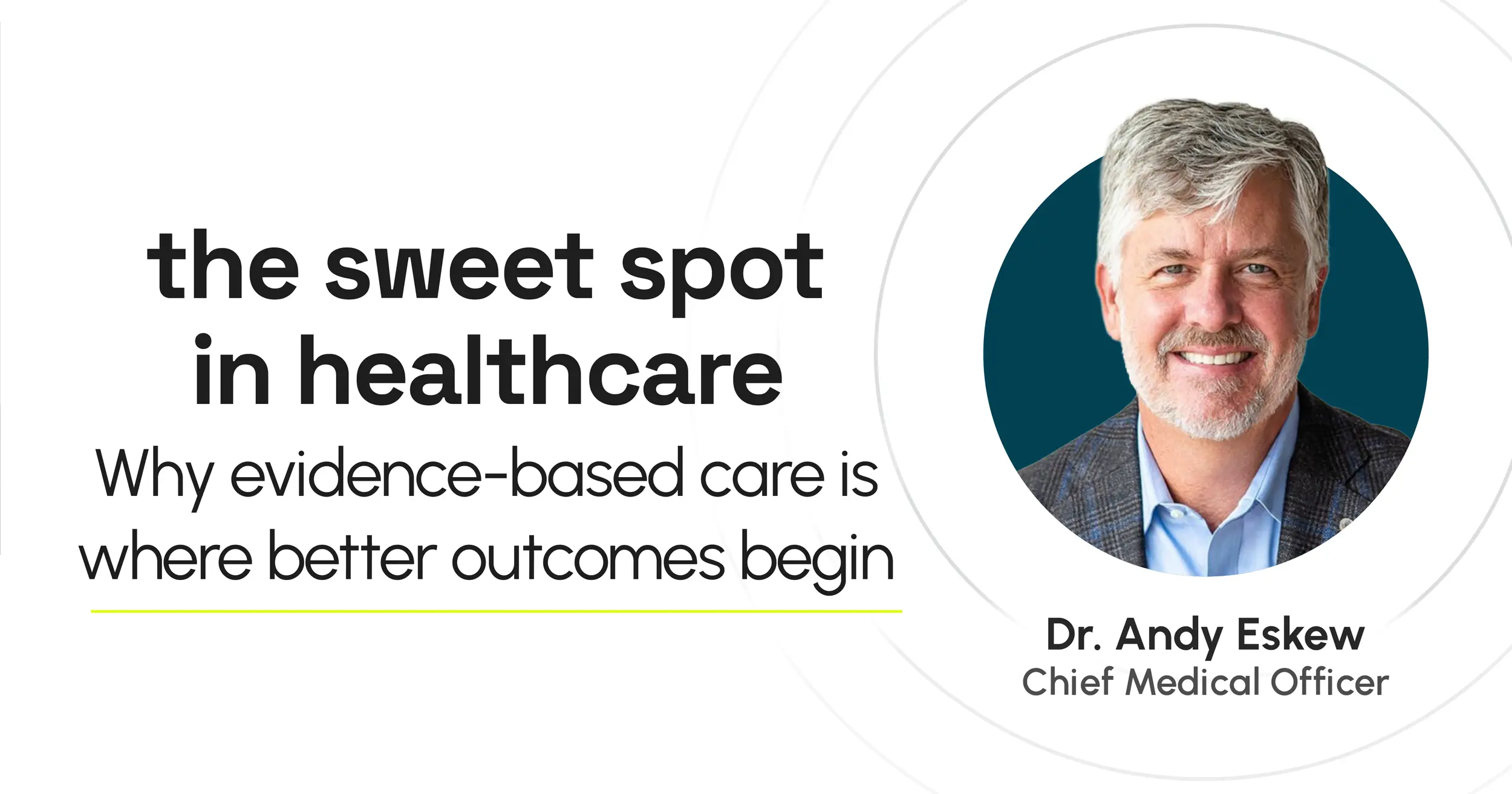
By Dr. Andy Eskew, MD, MBA
Chief Medical Officer, Revive Health
Over the years, I’ve had the chance to see healthcare from two very different angles. I’ve taken care of patients in the hospital, and I’ve helped build the systems that try to support that care on the business side.
One thing has become clear to me: we spend a lot of time arguing about which model is right, fee-for-service or value-based care.
However, when you’re standing in front of a patient, that debate doesn’t really help you.
The Problem with Picking a Side
Early in my career, I practiced in a traditional fee-for-service environment. Later, I worked in a fully value-based model. I’ve seen both up close. Fee-for-service rewards volume. The more you do, the more you get paid. That creates incentives, whether we like to admit it or not.
Value-based care flips that. You’re given a set amount of resources to manage a population, which introduces a different kind of pressure to be selective in how care is delivered.
Both models are trying to solve real problems, but both can create unintended consequences. One can lead to over-treatment. The other can create concern about under-treatment. Somewhere in the middle of that tension is where good medicine actually lives.
The Middle That Gets Overlooked
What I’ve come to believe is that the real answer isn’t choosing one model over the other.
It’s practicing evidence-based care.
That means you take the patient’s symptoms, you look at the data, and you make decisions based on what the evidence tells you to do.
Not based on how you get paid. Not based on how much budget you have left. Just based on what is right for that patient in that moment. That’s the sweet spot in medicine.
Why Incentives Still Shape Behavior
Even if clinicians aim to practice evidence-based medicine, the system around them still matters. Most traditional healthcare plans are built around disincentives.
Patients have co-pays, deductibles, and out-of-pocket costs. Every interaction with the system requires them to pause and ask, “Is this worth it?” That hesitation delays care, and when care is delayed, problems get worse. That’s not a patient behavior issue. That’s a system design issue.
What Happens When You Remove Friction
When you remove those barriers, something changes. People seek care earlier. They address problems when they are still manageable. Clinicians are able to make better decisions because they are seeing patients sooner, with more complete information.
This is where evidence-based care becomes practical, not theoretical.
Aligning the Model with the Medicine
At Revive, we operate on a per-member, per-month model. That structure matters. It removes the incentive to over-treat because more services don’t generate more revenue.
It removes the incentive to under-treat because the goal isn’t to conserve resources at the expense of care.
The only thing left is to do what’s appropriate.
That alignment allows clinicians to practice the way they were trained to practice in the first place.
Why This Matters for Brokers and Employers
For brokers and employers, this isn’t just a clinical conversation. It’s a financial one. Every dollar spent on healthcare comes from the business.
When employees delay care because of cost or access barriers, that shows up elsewhere. More expensive claims. More time away from work. More frustration across the organization.
When care is accessible and appropriately used, those downstream effects start to change. That’s real value.
Moving Past False Choices
Healthcare needs better alignment between how care is delivered and how decisions are made. Evidence-based care is not a new concept, but it is often lost in systems that push clinicians toward one extreme or the other.
If we want better outcomes, lower costs, and a better experience for patients, we need to stop forcing a choice that doesn’t reflect how medicine actually works.
The Sweet Spot Is Where Care Gets Better
Good care doesn’t come from incentives. It comes from listening to patients, understanding the data, and making the right decision at the right time.
That’s what evidence-based care allows us to do, and when the model supports that approach instead of working against it, everything starts to function the way it should.
About the Author
Dr. Andy Eskew is Chief Medical Officer of Revive, where he leads clinical strategy and physician governance across the company’s national virtual care platform. A board-certified urologist with over 25 years of experience, he brings a unique blend of clinical and operational leadership to advancing accessible, high-quality care nationwide.