


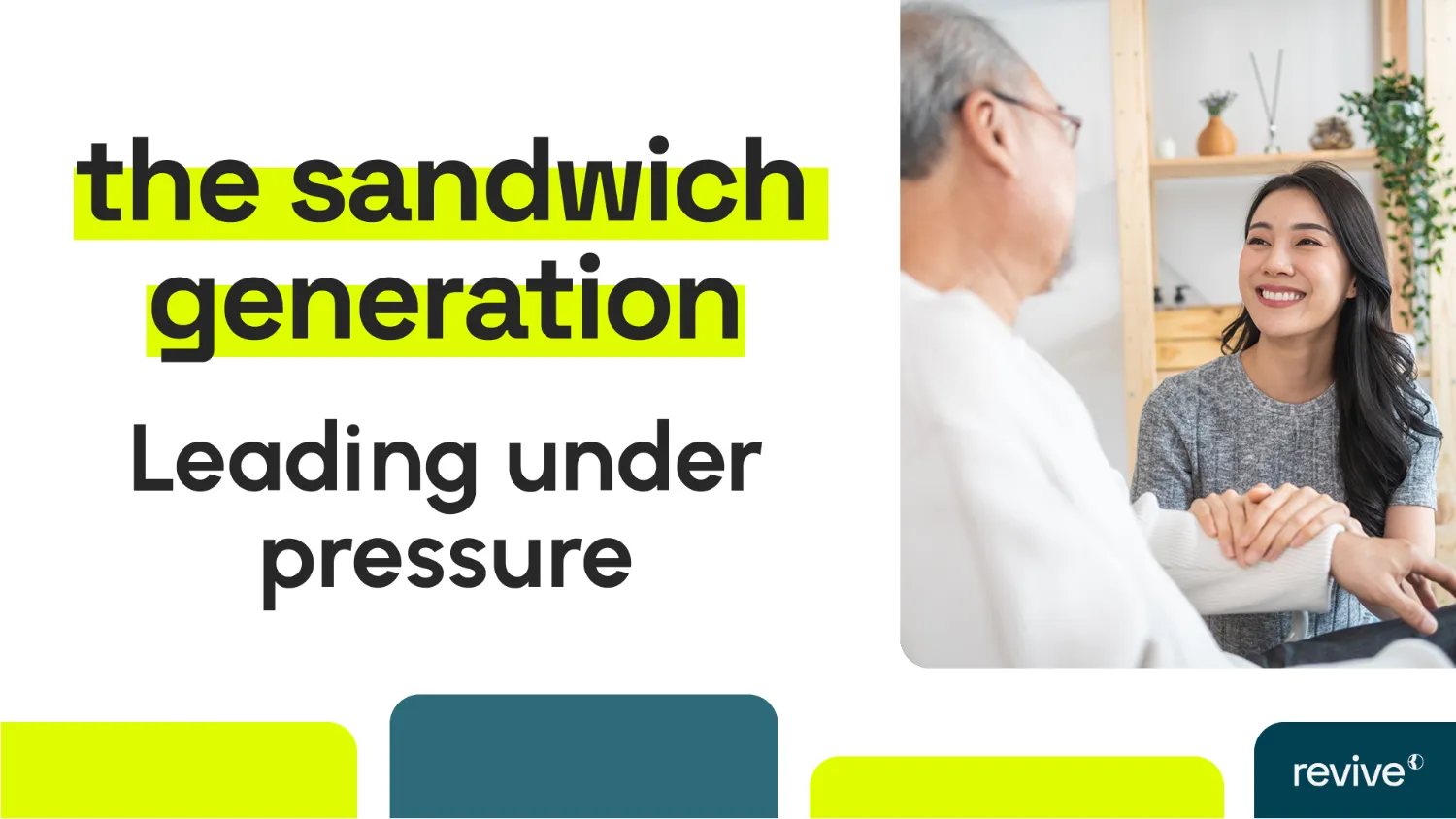
The Sandwich Generation Shouldering Leadership in the U.S.
Across the U.S., many experienced leaders are carrying dual responsibilities: leading at work while caring for aging parents, growing children, or both. This group, often called the sandwich generation, is shouldering a growing share of organizational leadership.
This perspective is for organizations looking to sustain leadership capacity when caregiving demands increase.
This is an area Revive Health continues to explore in its work with employers across the U.S.
The Reality Leaders Are Navigating
For many leaders, the day starts before work and ends long after it.
- A call with a parent’s doctor.
- A school email that needs an answer now.
- A calendar full of meetings in between.
None of that replaces the job; it piles on top of it.
Leaders in the sandwich generation are often capable, dependable, and deeply committed. They do not want special treatment. They want to keep doing their jobs well.
Many are effectively holding two full-time roles, one everyone sees, and one no one does.
And too often, the healthcare system meets them only once something has already escalated. In a model built around sick-care, prevention and early access fall away, leaving leaders to carry even more outside the workplace. Revive explores this further in Beyond the Sick-Care System: Why Prevention and Access Should Be Your Corporate Strategy.
Over time, the constant pressure adds up. Energy drops. Focus slips. What once felt manageable now feels heavy.
Why Does Caregiving Become a Leadership Problem?
Caregiving stress does not stay at home when the workday begins. It affects energy, focus, availability, and decision-making. When leaders feel stretched, teams sense it quickly, even if nothing is said out loud.
According to the Pew Research Center, this is especially common in midlife: 54% of Americans in their 40s are part of the sandwich generation, balancing care for both children and aging parents.
Organizations often lose strong leaders at this stage of life — not because commitment disappears, but because the workload becomes unsustainable without support. When leadership capacity erodes, culture and performance follow.
What Real Support Looks Like
Support must reflect how leadership works.
It begins with acknowledging caregiving as a normal part of life, even at senior levels. It continues with flexibility that fits leadership roles, including:
- Clear expectations that reflect real capacity
- Travel demands that can flex during high-care seasons
- Short-term workload adjustments without long-term career penalty
Managers also need tools and permission to lead with empathy. Real support shows up in conversations that lead to action, not just understanding.
Leaders do not need permission to care.
They need room to lead differently for a while.
Leading Through the Season
This season is not about balance.
It is about sustainability.
Leaders who are honest about capacity, who use flexibility intentionally, and who accept support are not stepping back. They are protecting their ability to stay effective over time.
When leaders model this approach, they create space for others to do the same.